
Designing the Underworld
From ancient mythology to graphic novel pages

In Chinese mythology, the Underworld (aka Hell) is where every mortal soul goes after finishing their time in the living world before moving on to their next life.
It’s ruled by Yán Wáng (阎王), the king who judges each soul based on how they lived. If you lived a good life, you’re rewarded with a better one next time around. If you caused harm, you’ll face punishment first. And the truly evil? They’re sent to the deepest prisons of the Underworld before they can be reincarnated.
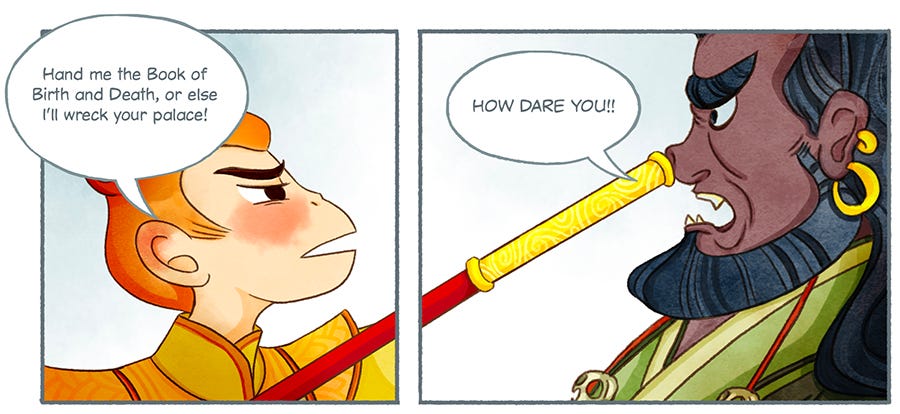
Yán Wáng keeps a giant book recording every soul’s name, birthday, and the exact date they’re meant to die. When that day arrives, his reapers—Ox-Head (牛头), Horse-Face (马面), or Heibai Wuchang (黑白无常)—come to escort the soul to the Underworld.
I had so much fun designing these Underworld characters.
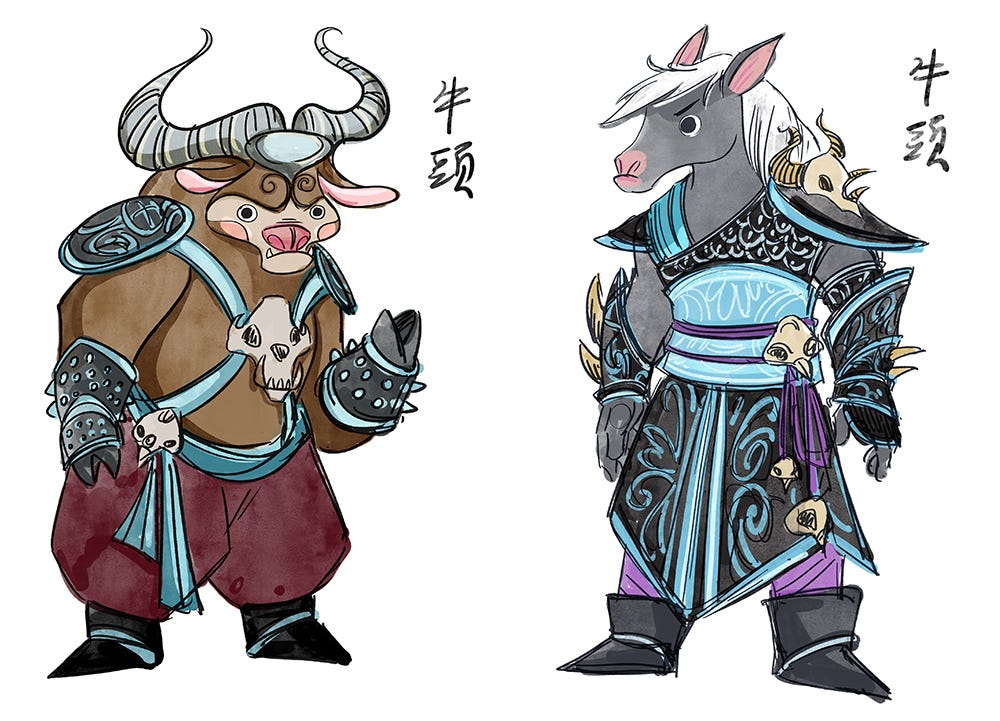
These are the early character designs for Ox-Head and Horse-Face. I had way too much fun drawing these two. Sadly, there was only enough panel space for one of them, so Horse-Face got cut.
Why Ox-Head? Because I think he’s funnier... and, if I’m being completely honest, I’m a little biased. I just like cows more than horses. 😆
In the myths, Ox-Head and Horse-Face are described as ugly and terrifying, but they’re actually pretty harmless. Day after day, they simply do their job: escorting newly departed souls to the Underworld.
I like to think of them as government employees.
They have stable jobs, decent benefits (hopefully 😆), but definitely not rich. Some days are easy, with kind, cooperative souls who make the work feel rewarding. Other days… they run into the Monkey King and get yelled at or beaten up. Not Fun!
So in my version, Ox-Head and Horse-Face are big, intimidating-looking, and a little goofy. Underneath it all, though, they’re just ordinary workers trying to get through another day on the job.
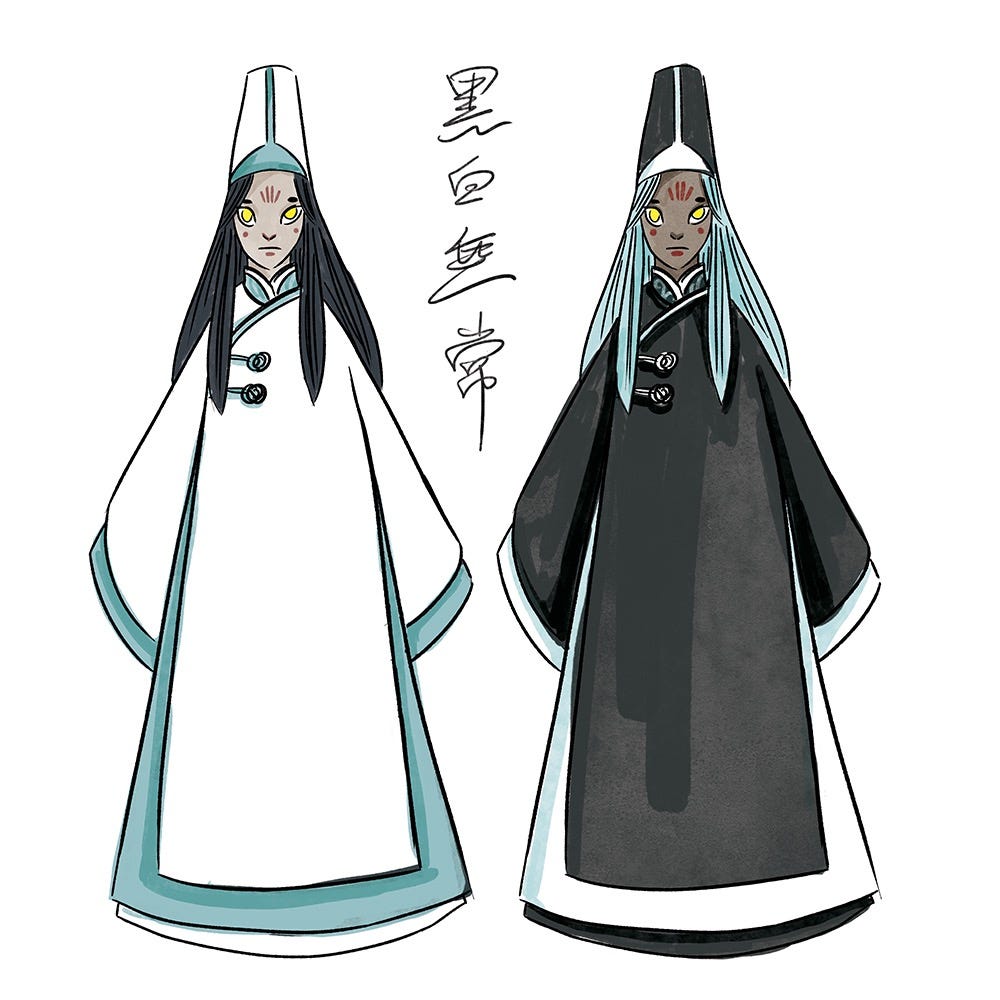
Yán Wáng’s other reapers, Heibai Wuchang (黑白无常), look much more human. They’re often portrayed in folklore as more capable and powerful than Ox-Head and Horse-Face, so I imagined them handling the more difficult assignments. Besides collecting souls, they also help Yán Wáng with investigations, paperwork, and all the behind-the-scenes work that keeps the Underworld running.
Even with their magical abilities, though, they’re really only powerful when dealing with mortal souls. Against someone like the Monkey King? They don’t stand much of a chance.
As for Yán Wáng himself, he’s not much of a fighter. He’s an ancient deity who has likely existed since the beginning of the Three Realms. His true power lies in seeing the truth and judging every soul fairly.
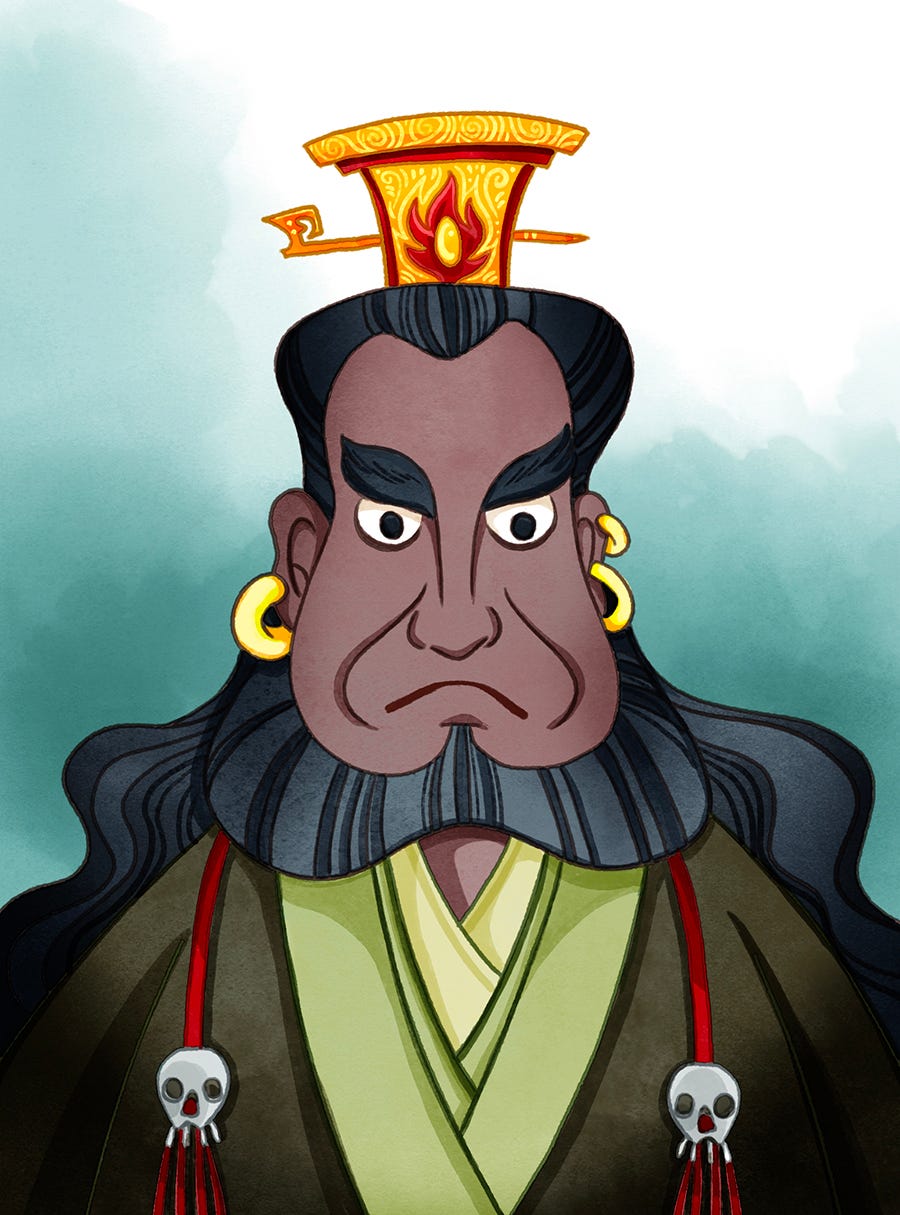
In traditional Chinese folk art, dark skin is often used as a symbol of wisdom, integrity, and justice. A famous example is Bāo Qīngtiān (包青天), the judge often depicted with a dark face in Chinese opera and many film and television adaptations. So I gave Yán Wáng a dark skin tone as well.
To show just how ancient his realm is, I based both his clothing and the architecture of his palace on the early Shāng (商) and Zhōu (周) dynasties — the two oldest historical dynasties of China.
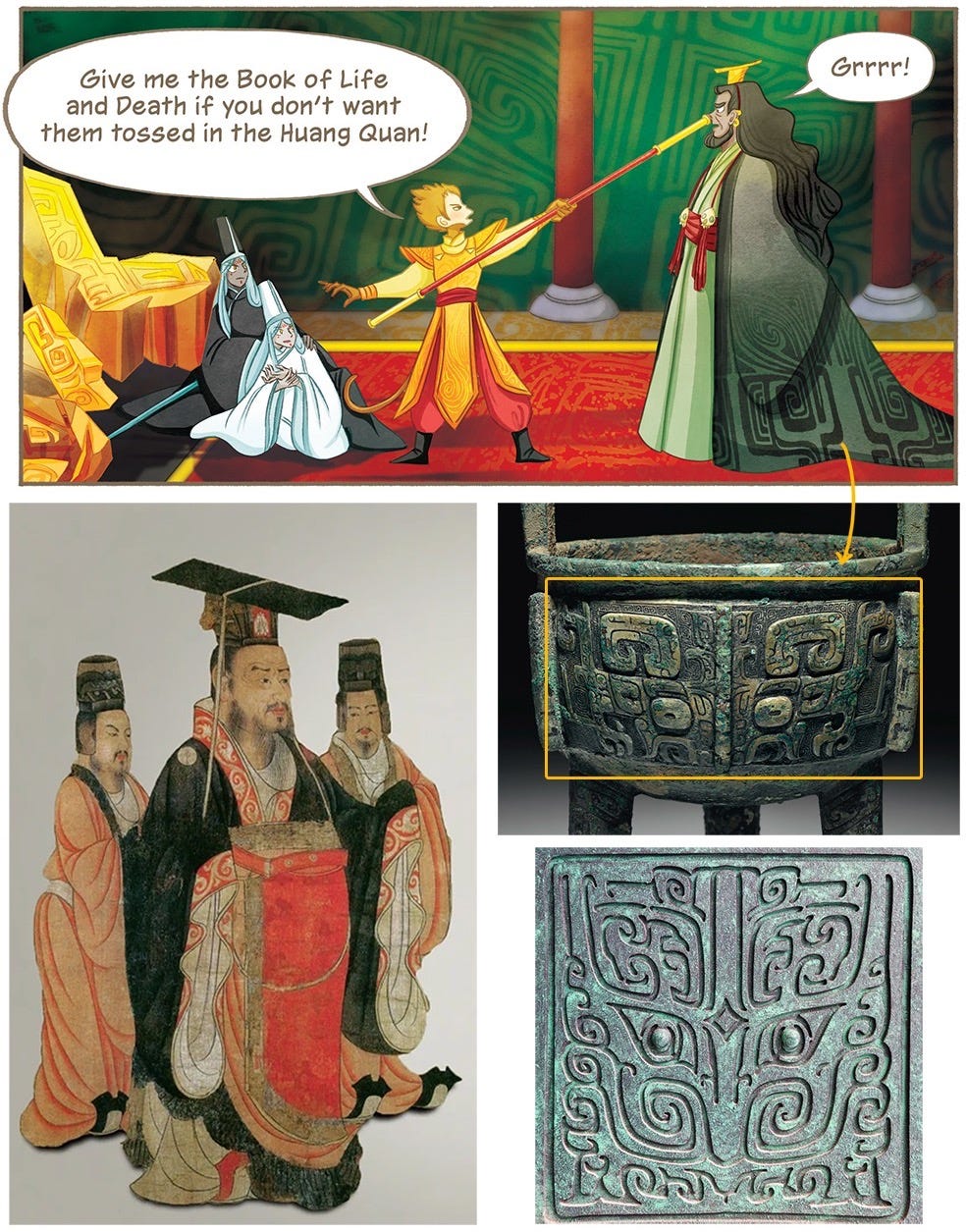
One detail I really like in Yán Wáng’s design is the Taotie (饕餮) motif. This bold, symmetrical monster-face pattern often appears on Shang dynasty vessels. These patterns stood for power and protection, so I used them on Yán Wáng’s robe and the walls of his palace.
His robe takes inspiration from the Zhōu dynasty, a time when kings wore dark robes with long, wide sleeves. Over time, sleeves became more practical, and royal colors changed to the yellow and gold we often see in later dynasties.
If you’d like to see what kind of mayhem the Monkey King causes in the Underworld (spoiler: it’s a lot 😆), check out Monkey King: Uproar in Heaven!

Want to learn more about the book, what it's about, and all the fun facts behind making it? Check it out here!

Curious about how books are made? Join ⭐️ Story Makers Art Club ⭐️ and come behind the scenes for art, fun history, creative adventures, and subscriber-only extras.